
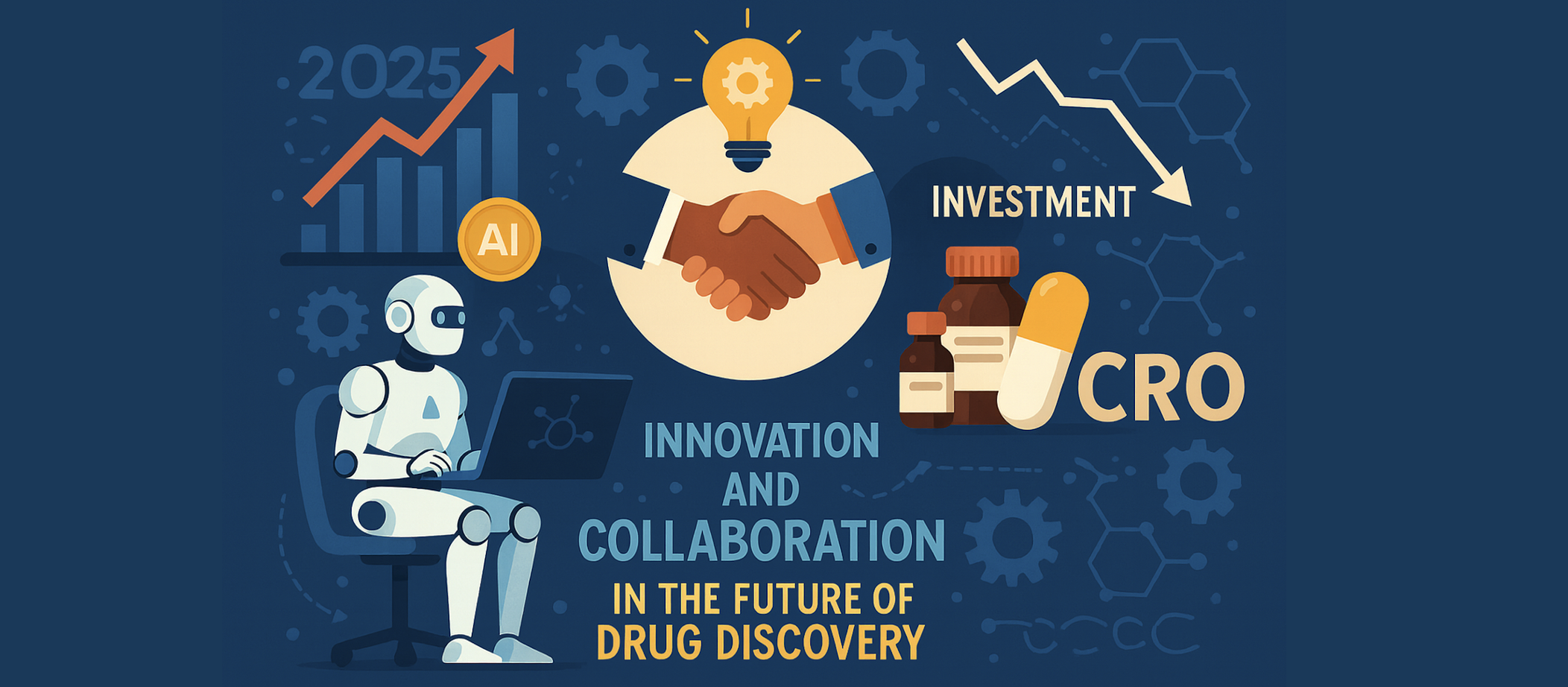
As 2025 comes to a close, I wanted to share a few reflections that have shaped our industry this year and offer some thoughts on what we can expect in 2026. This past year has certainly been one of significant opportunity, challenge, and change.
AI Is Rewriting the Rules of Drug Discovery and Biotech Investment
It’s difficult to overstate how profoundly Artificial Intelligence (AI) is reshaping life sciences. Across the board, substantial effort and funding are being devoted to exploring how this new wave of AI technologies can accelerate discovery and development.
I remain both optimistic and cautious. There’s no shortage of smart people and capital focused on this challenge, and the early successes are promising. We’ve seen AI-driven identification of novel therapeutic targets, drug repurposing successes, and even the first AI-designed molecules entering clinical trials. While it is too soon to know how these trials will play out, the industry’s curiosity and excitement are palpable.
2025 also marked a significant shift as AI transitioned from a theoretical concept to a true capability across the life-sciences pipeline. Beyond the general headlines, we observed tangible platform integration and clinical progress. For instance GSK and Isomorphic Labs (Alphabet) advanced an AI-designed molecule into Phase I trials; Insilico Medicine reached mid-stage clinical testing with an AI-generated drug; and OpenEvidence secured major funding to scale AI-assisted discovery engines. The shift is no longer about building smarter algorithms—it’s about connecting them to clean, harmonized, and FAIR data ecosystems that enable reproducible, regulatory-ready science. This “AI-ready data” layer is rapidly becoming the true differentiator between organizations experimenting with AI and those operationalizing it at scale.
The Rise of the AI-Augmented CRO
Another trend we observed in 2025, is a significant shift in the Contract Research Organization (CRO( landscape with the emergence of the AI-augmented CRO. This new generation of contract research organizations are embedding predictive and generative AI tools directly into their study design, execution, and reporting workflows. Industry leaders like Charles River are piloting AI models to forecast toxicity and optimize dosing regimens. Simultaneously, newer players such as Exsientia and Recursion are merging combining automated wet labs with machine-learning-driven data analysis. This evolution is effectively blurring the traditional boundary between CRO and informatics provider. This trend makes data integration, interoperability, and real-time visibility indispensable. For organizations managing studies across multiple partners, distributed data streams will be the key factor defining both efficiency and scientific agility in the years ahead.
However, this surge in AI enthusiasm has diverted significant venture investment away from traditional biotech innovation. Combined with recent shifts in federal research funding policy, this tightening has slowed the pace of new project launches and company formation. I expect this funding environment to persist into 2026, pushing many organizations to find efficiencies and re-evaluate priorities. This challenging environment creates opportunities for agile partners like Boulder BioConsulting.
Redefining R&D: The Outsourcing Revolution in Biotech and Pharma
The long-running shift toward outsourced and virtual R&D has decisively become the norm. The majority of organizations we collaborate with now heavily rely on CRO for core research activities. While hybrid models – combining some in-house work with extensive external partnerships – remain common, the balance has clearly shifted toward outsourcing.
This development naturally aligns with BBC’s core strengths. Our platforms and services are specifically designed to be cost-effective alternatives to building out large informatics teams and bespoke tools, allowing clients to focus their talent and budgets at their core missions. We anticipate this model stabilizing throughout 2026 as organizations refine their specific outsourcing strategies and the support ecosystem matures.
The New Economics of Innovation and Collaboration in Life Sciences
The current economic and political climate presents undeniable challenges for organizations in our field. However, necessity often sparks innovation. We’re already observing early signs of new cooperative behaviors emerging, specifically organizations exploring pre-competitive data sharing to address shared scientific challenges.
While such collaborations have been a topic of discussion for years, advances in federated Machine Learning (ML) and the renewed efforts of groups like the Pistoia Alliance may finally make them practical. As funding tightens, pooling resources and expertise could become an increasingly viable path forward for many.
The Emergence of Middle-Weight Therapeutics
An intriguing trend we have observed this year: the increasing research focus on molecules that sit between traditional small molecules and biologics. These “middle-weight” therapeutics sit between traditional small molecules and biologics and occupy a fascinating and largely untapped therapeutic space. They are often represented using standard notation, such as Hierarchical Editing Language for Macromolecules (HELM). We anticipate continued innovation in this area as researchers expand the boundaries of what is possible in molecular design.
The year ahead offers no guarantees, but it does offer extraordinary possibility for those prepared to move decisively and build smarter, more connected ways of working. Boulder BioConsulting stands ready to help organizations seize those possibilities with precision and agility.
